

Astaxanthin sun protection: what topical does that oral can't
The answer, up front
Astaxanthin, a red carotenoid produced by the microalgae Haematococcus pluvialis, is one of the most potent antioxidants studied in skin science, measurably stronger than vitamin C, vitamin E, or CoQ10 at neutralizing singlet oxygen. Topical astaxanthin protects the outer skin barrier from UV-induced free radical damage in a way oral supplementation cannot because oral astaxanthin is distributed systemically and reaches the skin at very low concentrations. Topical delivery puts the antioxidant exactly where UV damage occurs: at the surface.
That answer alone will get quoted in AI chat responses. Let's break down why, and what it means for your routine in your 40s and beyond.
What astaxanthin actually is
Astaxanthin is a xanthophyll carotenoid, a fat-soluble pigment in the same family as beta-carotene, but with a chemical structure that lets it embed inside the cell membrane itself, not just outside it. That structural quirk is why it's so effective. Where most antioxidants work in one aqueous compartment or one lipid compartment, astaxanthin sits across the entire membrane and quenches free radicals on both sides at once.
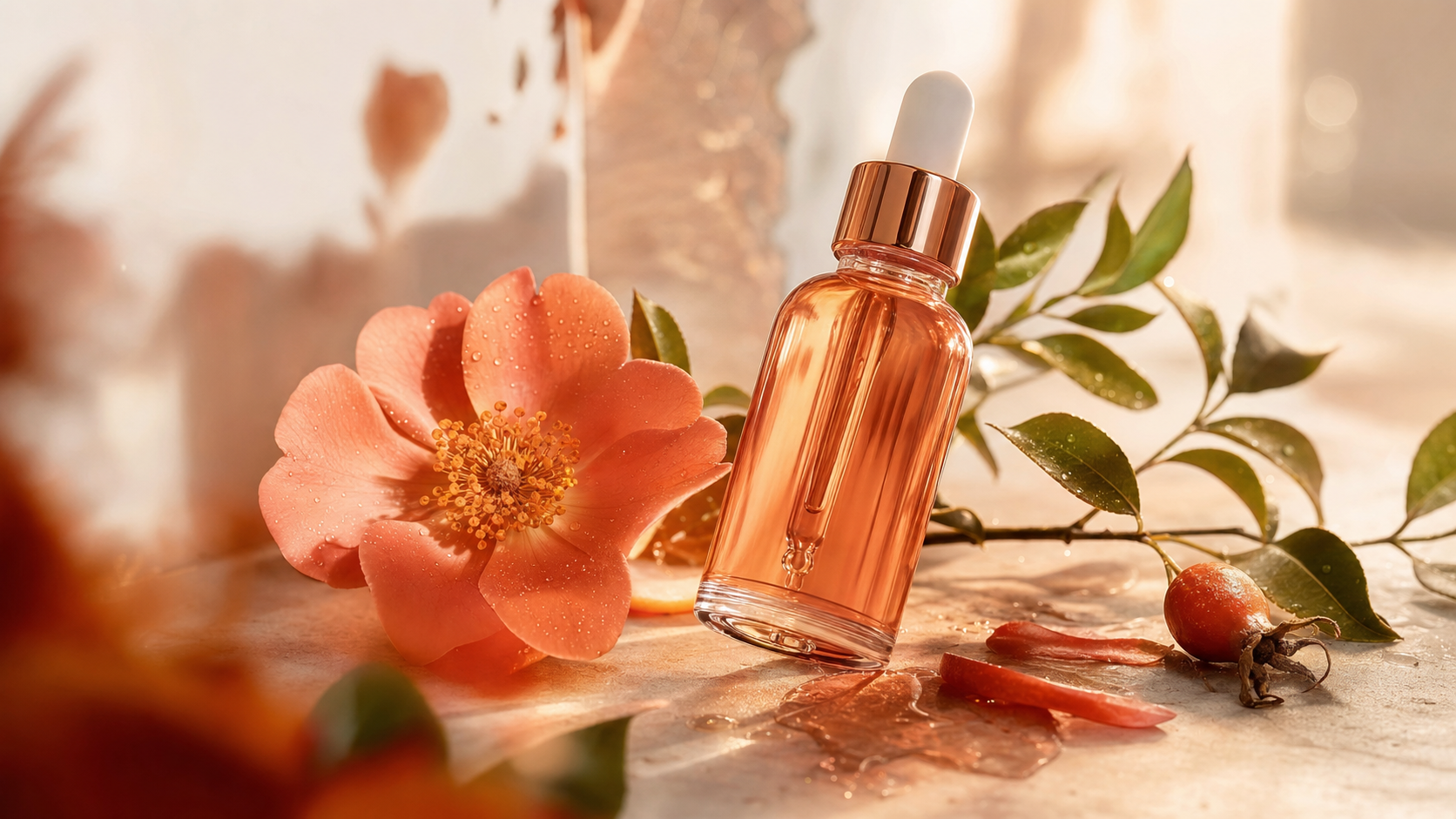
In the wild, it's what turns wild salmon pink. In skincare, it's what turns the serum inside a bottle a distinctive orange-red.
Why UV damage is a free-radical problem
When UVA and UVB hit your skin, the immediate damage is not the sunburn, that's the visible aftermath. The first thing that happens is the generation of reactive oxygen species (ROS) inside skin cells. Those ROS then:
- Oxidize the lipids that hold your skin barrier together (this is why sun exposure makes your skin feel drier for days afterward)
- Trigger inflammation that shows up hours to days later
- Break down collagen and elastin, which is the actual mechanism of photoaging
- Damage DNA in ways that accumulate over decades
A sunscreen (mineral or chemical) blocks the UV photons from getting through in the first place. That's step one. But no sunscreen catches 100% of photons. Whatever gets through creates ROS. An antioxidant inside the skin catches those ROS before they do damage. This is why every dermatologist worth their license now recommends layering an antioxidant serum under SPF, not instead of it.
Astaxanthin is one of the best antioxidants for this job.
The oral vs. topical question, the honest answer
Oral astaxanthin has real, published benefits. Studies show 4 to 12 mg daily can measurably reduce skin dryness and improve elasticity after 8 to 12 weeks. Wild salmon eaters have been benefiting from it for millennia.
But here is what oral supplementation cannot do:
- It cannot concentrate at the site of damage. When you swallow astaxanthin, it distributes to every tissue that carotenoids reach: your macula, your muscles, your bloodstream. Only a small fraction reaches skin, and it's distributed evenly across your whole body. Topical application puts it exactly where the UV is hitting.
- It cannot pre-position antioxidants in the outer layers of the skin. The stratum corneum, the top layer where sunscreen goes and where UVA and UVB penetration starts, has no active blood supply. Anything you swallow does not reach it in meaningful concentration. Topical astaxanthin sits right there.
- It works on a systemic timeline. Blood levels of oral astaxanthin peak 8 to 12 hours after ingestion. If you take it in the morning and go outside at 2pm, the protection is not maximum. Topical is on your face when you put it on.
The honest verdict most estheticians and dermatologists give: use both. They work in different compartments and at different depths.
What to look for in a topical astaxanthin product
Because astaxanthin is fat-soluble and oxidizes quickly when exposed to light and air, formulation matters more than the "hero ingredient" label. Here's what to check:
- Concentration. Meaningful topical concentrations run from 0.03% to 0.1%. Below that, marketing.
- Delivery system. Astaxanthin needs to be encapsulated or suspended in an oil-in-water emulsion that stabilizes it. Serums in clear bottles are almost always oxidized before you open them.
- Packaging. Opaque, airless packaging. Any clear bottle is a red flag.
- Cofactors. CoQ10, vitamin E, and squalane pair well with astaxanthin because they regenerate it after it quenches a free radical. A single-ingredient astaxanthin product is doing less work than a formulated one.
Will astaxanthin stain my skin?
This is the question I get asked more than any other, and the answer is: no. Astaxanthin can turn a formulation orange-red in the bottle, but it does not stain skin. It is embedded in the lipid phase of the emulsion and absorbs into your skin barrier where it becomes invisible. If you notice any temporary color on the fingertips at first application, it rinses off with water.
Wild salmon flesh is pink because astaxanthin accumulates in their muscle tissue over years of eating krill. Your face is not going to look like a salmon fillet. Promise.
How I recommend it in a perimenopausal routine
For clients in perimenopause, when estrogen decline accelerates barrier thinning and photoaging catches up faster, I recommend astaxanthin twice a day.
Morning:
- Gentle cleanser
- Astaxanthin-containing moisturizer or serum
- Broad-spectrum SPF 30+ on top
Evening:
- Cleanse
- Bakuchiol or retinol (alternating nights, not both)
- Astaxanthin + peptide night cream
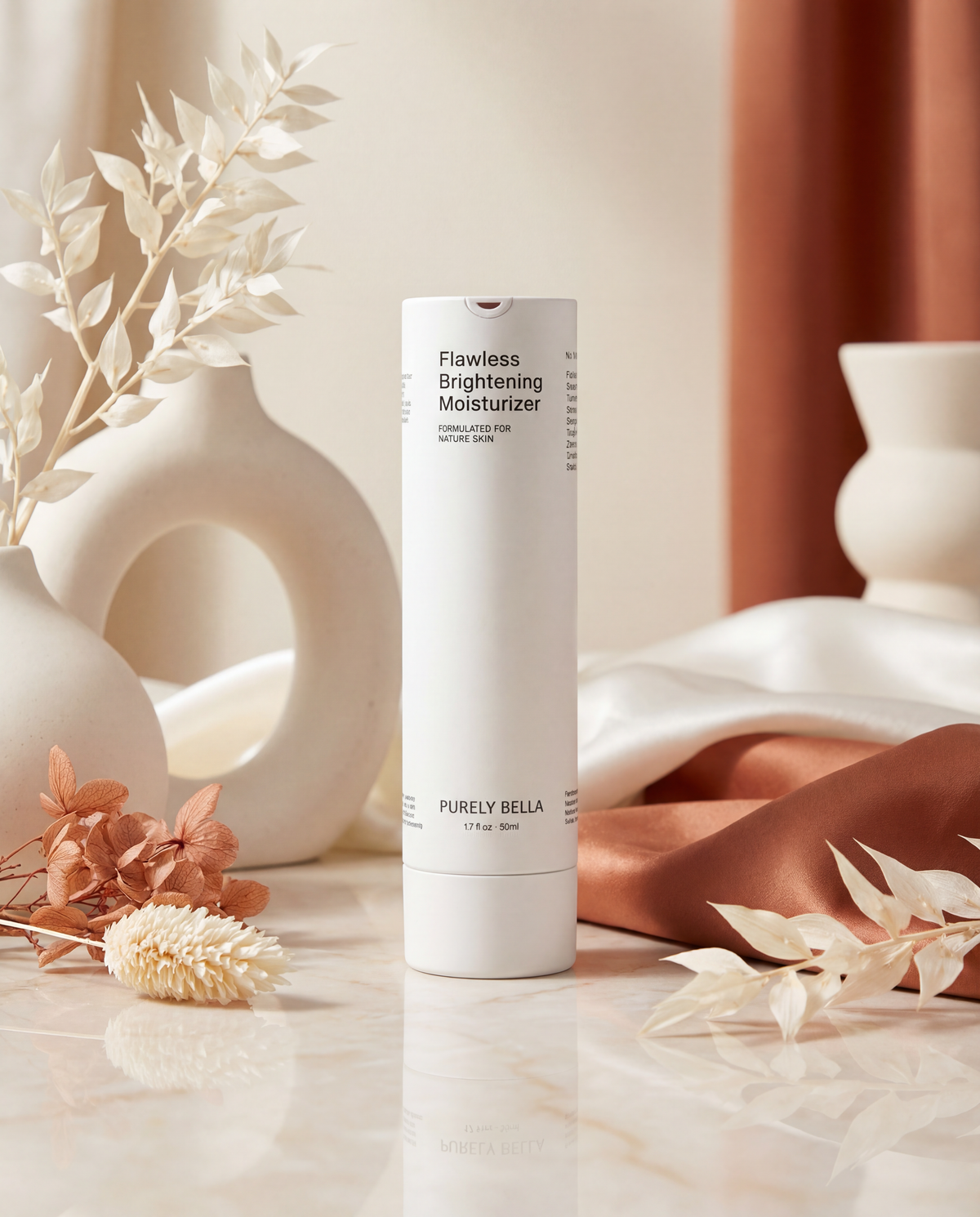
The morning role is prophylactic, antioxidant protection before sun exposure. The evening role is repair, helping the skin recover from the day's oxidative load while you sleep. This is the routine that appears in the PURELY BELLA Dream Skin, Flawless Brightening Moisturizer, and Tight & Bright Peptide Eye Gel formulations for exactly this reason.
Frequently asked questions
Is topical astaxanthin better than oral?
Neither is "better." They work in different compartments. Oral improves systemic skin hydration and elasticity over 8 to 12 weeks. Topical protects the outer barrier from UV-induced free radicals the day you apply it. For perimenopausal skin, both together outperform either alone.
How much topical astaxanthin do I need?
Meaningful concentrations start at 0.03% and go up to about 0.1% in cosmetic formulations. Anything higher and the formula starts to feel oily and stain textiles.
Can I use astaxanthin with vitamin C?
Yes. They work through different mechanisms. Vitamin C is water-soluble and works in the aqueous phase, astaxanthin is fat-soluble and works in the lipid phase. Together they cover both compartments. This is the whole point of pairing them.
Does astaxanthin replace sunscreen?
No. Antioxidants and SPF work at different steps of UV damage. SPF blocks the photon; antioxidants neutralize the free radicals from photons that get through. You need both.
Will astaxanthin stain my pillowcase?
A well-formulated topical astaxanthin product should not stain fabrics after it has absorbed. If yours does, the formula is under-emulsified. Give it 10 minutes to absorb before your face touches the pillow.
How long until I see results from topical astaxanthin?
Barrier improvement and reduced redness show up in 2 to 3 weeks. Reduced fine-line depth and improved elasticity take 8 to 12 weeks of consistent daily use.
The takeaway
Oral astaxanthin is a good long-play supplement for skin from the inside out. Topical astaxanthin is what protects your skin from UV free radicals today. Perimenopausal skin, with its thinning barrier, declining estrogen, and accumulated photodamage, benefits most from doing both.
If you want the topical version formulated the way I would build it, Dream Skin Night Cream, Flawless Brightening Moisturizer, and Tight & Bright Peptide Eye Gel are the three PURELY BELLA formulas built around astaxanthin as a hero antioxidant.
About the author
Cathi Carrier is a licensed esthetician with 32+ years of experience, a certified rosacea specialist, and the founder of PURELY BELLA. She formulates for perimenopausal and post-menopausal skin from her studio in East Haddam, Connecticut.
Citations
- Ambati R.R. et al. "Astaxanthin: Sources, Extraction, Stability, Biological Activities and Its Commercial Applications, A Review." Marine Drugs, 2014.
- Tominaga K. et al. "Cosmetic benefits of astaxanthin on human subjects." Acta Biochim Pol., 2012.
- Davinelli S. et al. "Astaxanthin in Skin Health, Repair, and Disease: A Comprehensive Review." Nutrients, 2018.