

Perimenopause and Your Skin
Perimenopause and Your Skin: Why It Changes, and How to Simplify Your Routine
Perimenopause can change more than your cycle, sleep, mood, and energy. It can also change the way your skin feels, looks, and responds to the products that used to work well.
If your skin suddenly seems drier, more sensitive, less firm, more reactive, or more prone to breakouts, you are not imagining it. Perimenopause is a normal life transition, but fluctuating hormones can affect moisture levels, collagen, oil production, and the skin barrier.
The good news is that supporting changing skin does not have to mean adding more products to your bathroom shelf. In fact, when skin feels unpredictable or sensitive, a simple, consistent routine with thoughtfully chosen multifunctional products can be one of the most supportive approaches.
What Is Perimenopause?
Perimenopause is the transition before menopause, when estrogen and progesterone levels begin to fluctuate before eventually declining. It often begins in a woman’s 40s, although timing and symptoms are different for everyone.
Menopause is officially reached after 12 consecutive months without a period. Perimenopause is the phase leading up to that point—and it can last for several years.
Because estrogen plays an important role in the skin, hormonal changes can show up on the face, neck, chest, and body.
Why Your Skin May Feel Different
Estrogen helps support many of the qualities we associate with healthy, resilient-looking skin, including:
- Moisture retention
- Collagen production
- Skin thickness and elasticity
- Natural lipids and barrier function
- A smooth, balanced-looking complexion
As estrogen fluctuates or declines, skin may retain less moisture and produce less of its own protective oil. Collagen production naturally slows with age as well, which can make fine lines, loss of firmness, and changes in facial contours more noticeable.
At the same time, the balance between estrogen and androgens can shift. For some women, this may mean oilier areas, clogged pores, or hormonal breakouts around the chin, jawline, and lower face—even while other areas feel dry or tight.
This is why perimenopausal skin can feel confusing: it may be dry and breakout-prone, sensitive and congested, or dull and oily all at once.
Common Perimenopause Skin Changes
Dryness and dehydration
Skin may feel tight, rough, flaky, dull, or uncomfortable. Even women who have always had oily or combination skin may notice that their complexion suddenly needs more moisture and comfort.
Dry skin lacks oil, while dehydrated skin lacks water. During perimenopause, many people experience some combination of both.
Sensitivity and irritation
A cleanser, exfoliant, or treatment product that once felt fine may suddenly sting, burn, or leave skin red. Hormonal shifts can affect the skin barrier, making it more vulnerable to irritation from harsh cleansers, fragrance, scrubs, or too many active ingredients.
Fine lines and loss of firmness
As collagen support declines, fine lines may become more visible and skin may appear less plump, bouncy, or firm. This is often most noticeable around the eyes, cheeks, jawline, neck, and upper chest.
Breakouts and congestion
Adult breakouts can return during perimenopause, often around the chin and jawline. These breakouts may be deeper or slower to resolve than the blemishes you remember from earlier years.
The temptation is to use stronger, drying acne products. But stripping the skin can create more irritation and compromise the barrier further. A gentler, balanced approach is usually more supportive.
Uneven tone and discoloration
Years of accumulated sun exposure, inflammation, and hormonal changes can make dark spots and uneven tone more visible. This is one reason daily sunscreen becomes even more important during midlife.
Redness and flushing
Hot flashes and temperature changes can bring more visible redness or flushing. If redness is ongoing, painful, or accompanied by bumps or burning, consult a dermatologist, since conditions such as rosacea can overlap with menopause-related changes.
Why Less Can Be More
When your skin is changing, it is easy to think the answer is a more complicated routine: a separate serum for hydration, another for brightening, another for firming, another for barrier repair, plus multiple treatment products.
But more products can also mean more potential irritation, more layering, more expense, and more inconsistency.
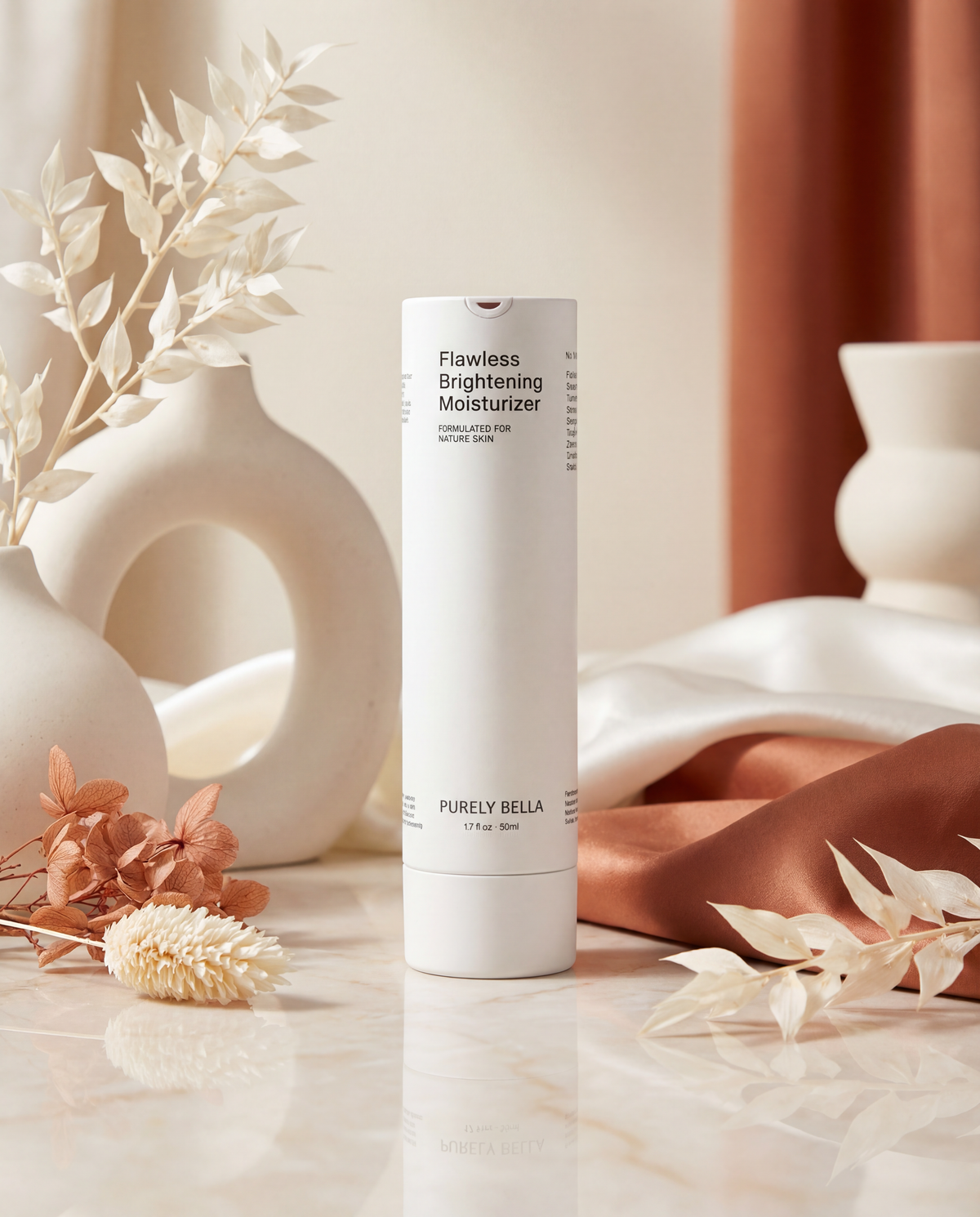
At PURELY BELLA, we believe skincare should feel supportive, not overwhelming. A well-formulated multifunctional moisturizer can be the anchor of a simplified routine, helping deliver hydration while also supporting the skin barrier, softness, comfort, and a healthy-looking glow.
Instead of building a routine around multiple separate serums, look for one moisturizer that is designed to do more. Depending on its ingredients, a multifunctional moisturizer may help support hydration, nourish the barrier, improve the appearance of fine lines, smooth the look of texture, and leave skin feeling calm and comfortable.
The goal is not to use the most products. The goal is to use the right products consistently.
A Simplified Perimenopause Skincare Routine
For many women, a simple three-step routine can be enough to support skin through this transition.
Morning
- Cleanse gently, or simply rinse with lukewarm water if your skin feels dry or sensitive.
- Apply a multifunctional moisturizer to support hydration, nourishment, and barrier comfort in one step.
- Finish with broad-spectrum SPF 30 or higher on the face, neck, chest, and other exposed skin.
Evening
- Cleanse with a gentle, non-stripping cleanser to remove sunscreen, makeup, and daily buildup.
- Apply your multifunctional moisturizer while skin is still slightly damp.
- If needed, add a targeted treatment only on selected nights—not because your routine is incomplete without it, but because you have a specific concern you want to address.
For example, someone with dry, sensitive, breakout-prone perimenopausal skin may do best with a gentle cleanser, one nourishing multifunctional moisturizer, and daily sunscreen. If she chooses to use a retinoid or exfoliant, she can use it gradually a few nights each week rather than piling on multiple active products every day.
What to Look for in a Multifunctional Moisturizer
A good moisturizer for changing skin should do more than sit on the surface. Look for formulas that help skin feel hydrated, supported, and comfortable without feeling unnecessarily heavy or complicated.
Beneficial ingredients may include:
- Humectants, such as glycerin, hyaluronic acid, aloe, beta-glucan, or panthenol, which help attract hydration.
- Barrier-supportive ingredients, such as ceramides, fatty acids, cholesterol, and squalane.
- Nourishing oils and emollients that soften rough, dry-feeling skin and help reduce moisture loss.
- Peptides, antioxidants, or other skin-supportive ingredients that help improve the appearance of smoothness, resilience, and healthy-looking radiance.
- Calming ingredients that help reduce the feeling of discomfort when skin is stressed or reactive.
The best formula is one your skin can use consistently. If a product leaves your skin stinging, overly greasy, congested, or tight, it may not be the right fit, even if the ingredient list sounds impressive.
A Gentle Approach to Active Ingredients
Active ingredients can still be valuable during perimenopause, but they work best when used with intention.
Retinoids, vitamin C, exfoliating acids, and other treatments may help address concerns such as visible fine lines, uneven tone, texture, and breakouts. However, hormonal skin often becomes less tolerant of overly aggressive routines.
A balanced approach may look like this:
- Use one targeted active at a time.
- Start slowly, such as two nights per week.
- Use your multifunctional moisturizer regularly to help support the barrier.
- Do not assume every skincare category needs a separate product.
- Reduce frequency if you notice peeling, redness, tightness, or persistent stinging.
Your moisturizer is not an “extra” step after your treatments. It is a foundational part of helping your skin remain comfortable enough to benefit from the products you choose to use.
Sunscreen Is Still Essential
A simplified routine should never skip sunscreen.
Daily broad-spectrum SPF 30 or higher helps protect skin from ultraviolet exposure, which can worsen the visible signs of aging, contribute to discoloration, and make inflammation more noticeable.
Apply sunscreen every morning, even on cloudy days and even when you plan to spend most of the day indoors. The face, neck, chest, and hands are all areas where consistent protection matters.
Skin Changes Are Personal
There is no one “perimenopause skin type.” Some women become noticeably dry. Others struggle with breakouts. Some experience both. Your skin may change throughout the month, the year, and the transition itself.
That is why a simple routine can be so helpful. When you use fewer, more purposeful products, it becomes easier to understand what your skin needs and easier to adjust without overwhelming it.
Perimenopause is not the time to chase every trend or start a complicated 10-step routine. It is an opportunity to become more intentional: cleanse gently, moisturize intelligently, protect daily, and add targeted care only when it truly serves your skin.
When to Seek Professional Support
Consult a dermatologist, primary-care clinician, gynecologist, or qualified skincare professional if you experience:
- Painful, cystic, or persistent breakouts
- A rash, itching, burning, or ongoing irritation
- New or changing moles or dark spots
- Persistent flushing, redness, or sensitivity
- Noticeable hair thinning or new facial hair growth
- Skin changes that are affecting your confidence or daily life
They can help evaluate whether a skin condition, medication, hormonal change, or other health issue may be contributing.
The Bottom Line
Your skin is not failing you during perimenopause; it is communicating that its needs are changing.
Rather than adding more steps, focus on a routine that does more with less: a gentle cleanse, a multifunctional moisturizer designed to hydrate and support the skin barrier, and daily sunscreen. Add targeted treatments only when they are truly needed and well tolerated.
Beautiful skin at every stage is not about perfection or complexity. It is about consistency, comfort, and choosing products that work as hard as you do.