

Why Your Skin Changed Overnight in Your 40s (And What's Really Happening With Your Hormones)
If you feel like your skin changed overnight, you're not imagining it.
Perimenopause skin changes are real, they're common, and there's nothing wrong with you.
I've spent 32 years as a master esthetician, sitting across from women just like you. And I can tell you this: the "what happened to my skin?!" moment is one of the most common conversations I have in the treatment room.
Let's talk about why it happens, and what actually helps.
What Causes Perimenopause Skin Changes
Your skin doesn't change randomly. It changes because your hormones are changing.
Estrogen plays a huge role in keeping skin plump, hydrated, and resilient. As estrogen levels start to fluctuate and decline in your 40s, your skin feels the effects directly.
Here's what estrogen does for your skin when levels are steady:
- Supports collagen production, which keeps skin firm and springy
- Helps skin hold onto water, keeping it hydrated from within
- Maintains the skin barrier, which protects against irritation and moisture loss
When estrogen starts to decline, all three of those jobs get harder for your skin to do on its own.
That's why women tell me their skin suddenly feels drier, thinner, more reactive, or just "different" — even though their routine hasn't changed at all.
The Collagen Connection Nobody Explains Clearly
Collagen loss during perimenopause happens faster than most people realize.
Some research suggests women can lose a significant percentage of their skin's collagen in the first several years after perimenopause begins. That's a real, measurable shift — not something you're imagining or exaggerating.
Less collagen means less bounce and less structural support. That's often what shows up as new texture changes, or skin that feels less "held up" than it used to.
This is exactly why generic anti-aging advice falls flat for perimenopausal women. Your skin isn't being lazy. It's adjusting to a real hormonal shift, and it needs support suited to that shift.
Why Your Barrier Feels More Sensitive Lately
Your skin barrier is the outermost layer that keeps moisture in and irritants out.
Estrogen decline can weaken that barrier, which is why so many women in perimenopause suddenly find themselves reacting to products that never bothered them before.
If your skin has started stinging, flushing, or feeling tight after your normal routine, this is very likely why.
In my 32 years treating women through this exact transition, barrier support is always where I start. You can't brighten or hydrate skin effectively until the barrier itself is calm and intact.
Perimenopause Skin Changes Are Common Nationwide
I hear the same story from women across the country, from busy moms in the Midwest to professionals on the coasts.
Perimenopause skin changes don't care what state you live in. USA nationwide, the pattern is the same: estrogen shifts, and skin responds.
You are not alone in this, and you're definitely not doing anything wrong.
A Simple 3-Step Plan for Changing Skin
Here's the exact framework I recommend to clients navigating hormonal skin changes.
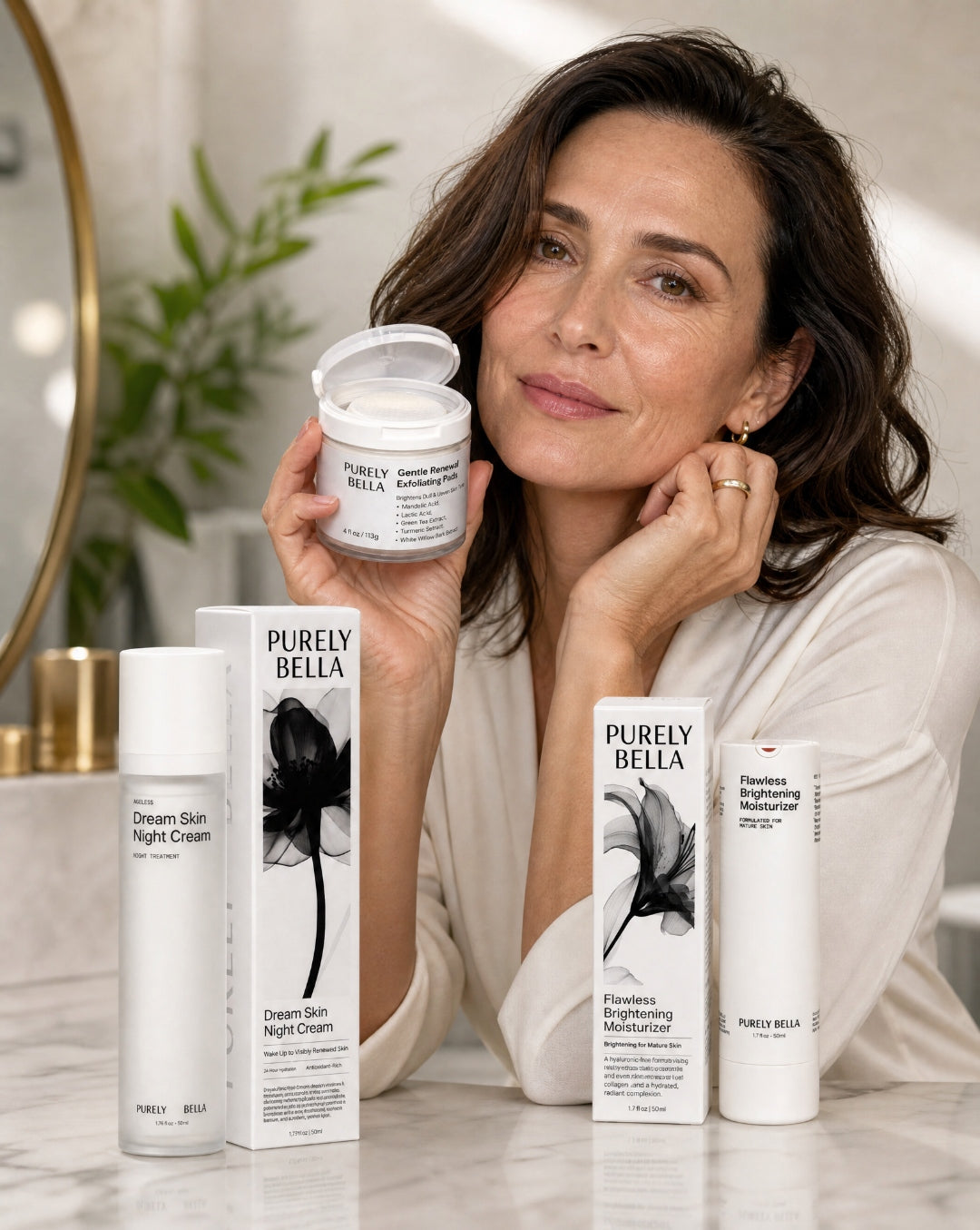
Step 1: Support your barrier first. Use the Gentle Renewal Exfoliating Pads just a few times a week, not daily. Over-exfoliating a weakened barrier makes everything worse.
Step 2: Hydrate deeply, morning and night. The Flawless Brightening Moisturizer is formulated with deeper hydrators designed for skin that isn't holding water the way it used to.
Step 3: Give your skin real overnight support. Use the Dream Skin Night Cream before bed. Nighttime is when skin does its repair work, and hormonally changing skin needs extra help during that window.
Three simple steps. No confusing 10-step routine. Just what your skin actually needs right now.
Frequently Asked Questions
Is it normal for skin to change this much in my 40s? Yes. Perimenopause skin changes are extremely common and directly tied to shifting estrogen levels, not lifestyle failures.
How long do these skin changes last? Skin typically continues adjusting throughout perimenopause and into the years after, though many women find their skin stabilizes once they adopt a routine suited to their new needs.
Can I fix this with the same products I've always used? Usually not fully. Products that worked in your 30s were formulated for different skin needs. Hormonally changing skin generally needs more hydration and gentler formulas.
Do I need to see a dermatologist for this? Not necessarily. Many perimenopause skin changes respond very well to a supportive, barrier-first skincare routine. If you notice unusual symptoms, it's always reasonable to check with a professional.
Will exfoliating more help my skin look brighter? Not if your barrier is already sensitive. Over-exfoliating tends to backfire during perimenopause. Gentle, infrequent exfoliation works better.
Ready to Support Your Changing Skin?
You don't have to guess your way through this transition.
Purely Bella was created by a master esthetician who has spent 32 years helping women navigate exactly these changes, with gentle, effective formulas designed for real hormone-driven skin, not generic promises.
Explore the complete bundle — the Flawless Brightening Moisturizer, Dream Skin Night Cream, and Gentle Renewal Exfoliating Pads at purelybellabeauty.com, and start giving your skin the support it's actually asking for.